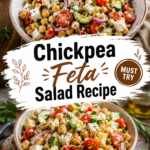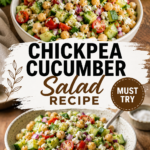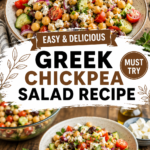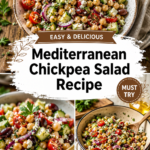
I wasn’t expecting a salad to change how I cook. But here we are.
I first had a version of this at a tiny taverna outside Nafplio, the kind of place with three tables and a cat that clearly runs the show. I asked the owner what was in it. She just laughed and said “everything good.”
She wasn’t wrong.
I ordered it thinking it would be a side dish. It ended up being the whole reason I went back the next night. My husband still brings it up when we talk about that trip, which says a lot considering we ate our way through half the Peloponnese.
This chickpea salad is loaded, briny, a little tangy, and somehow still light enough to eat a huge bowl of without feeling weighed down. It’s become one of those recipes I make on repeat, especially in summer.
I’ve made it for potlucks, packed it for beach days, and eaten it straight out of the container standing over my kitchen counter more times than I’d like to admit. It holds up no matter the setting.
Side Note: If you love Mediterranean flavors, my Greek lemon potatoes pair really well with this one.
Why This One’s Different
Most chickpea salads I’d had before were kind of sad. Canned beans, a squeeze of lemon, done.
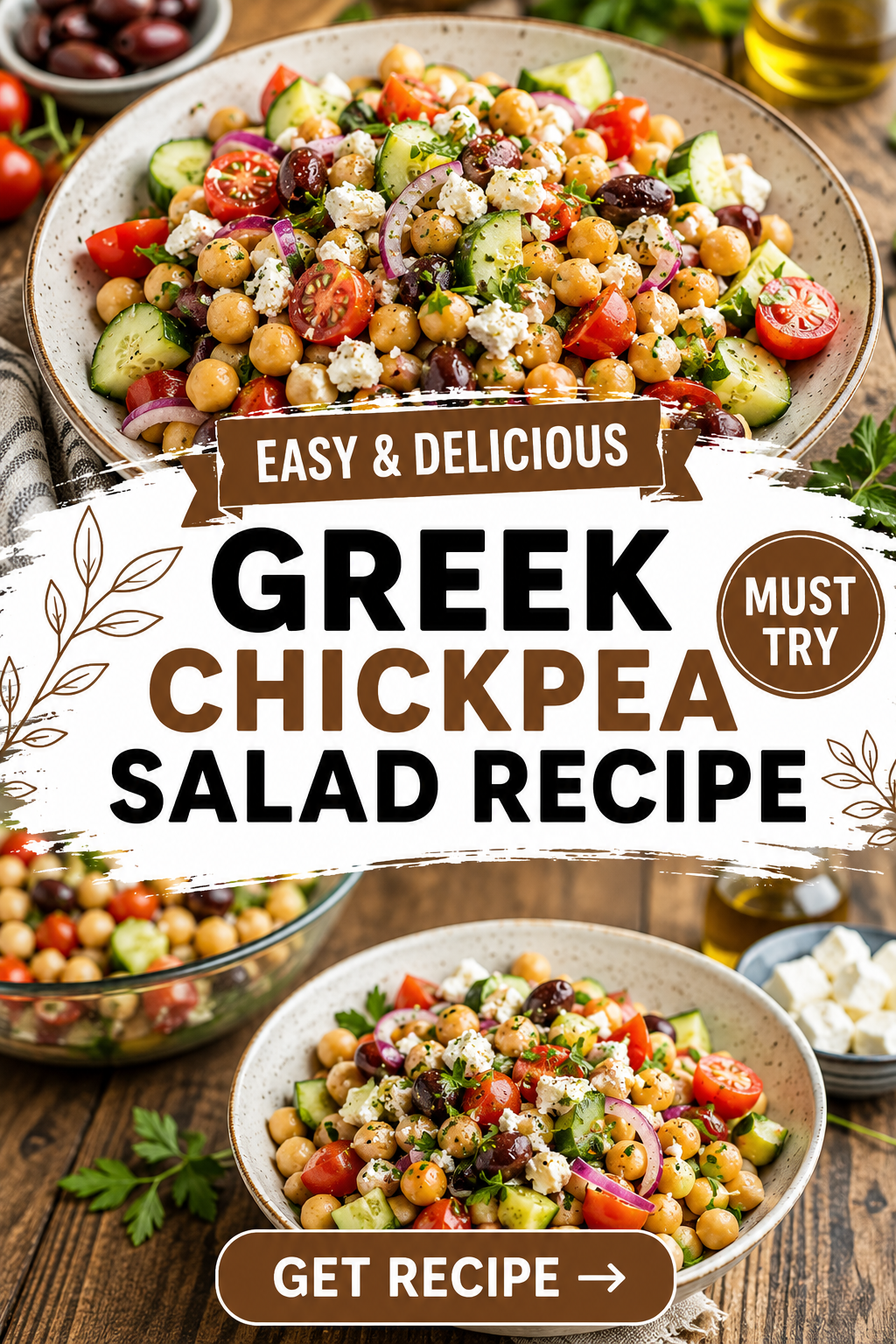
This version actually has layers. You get crunch from cucumber, sharpness from red onion, saltiness from feta and olives, and this herby freshness from dill and parsley that ties it all together.
It’s a salad that actually tastes like something.
And here’s the part that surprised me: chickpeas are one of those ingredients that quietly punch way above their weight. They’re loaded with fiber and plant-based protein, which is probably why this salad keeps you full way longer than a regular garden salad ever would.
I didn’t plan this as a “healthy recipe.” It just happens to be one.
What You’ll Need
For the salad:
- 2 cans (15 oz each) chickpeas, drained and rinsed
- 1 English cucumber, diced
- 1 pint cherry tomatoes, halved
- 1/2 red onion, thinly sliced
- 1 cup feta cheese, crumbled or cubed
- 1/2 cup kalamata olives, pitted
- 1/4 cup fresh dill, chopped
- 1/4 cup fresh parsley, chopped
For the dressing:
- 1/3 cup extra virgin olive oil
- 3 tablespoons fresh lemon juice
- 1 tablespoon red wine vinegar
- 2 cloves garlic, minced
- 1 teaspoon dried oregano
- 1/2 teaspoon salt
- 1/4 teaspoon black pepper
Tools You’ll Need
- Large mixing bowl
- Small bowl or jar for the dressing
- Sharp knife and cutting board
- Whisk or fork
- Measuring cups and spoons
How to Make It
Step 1: Make the dressing first.
Add the olive oil, lemon juice, red wine vinegar, garlic, oregano, salt, and pepper to a small bowl or jar.
Whisk it together, or if you’re using a jar, just put the lid on and shake it like you mean it.
Set it aside so the flavors can start mingling.
Step 2: Prep your vegetables.
Dice your cucumber into small, even pieces. You want bite-sized, not chunky.
Halve the cherry tomatoes and thinly slice the red onion.
If your onion feels a little sharp, soak the slices in cold water for 10 minutes. It mellows them out fast.
I learned this trick from Chef Alessandro on a completely different trip, and it’s become one of those things I use in nearly every salad now.
Step 3: Combine everything.
In your large bowl, add the chickpeas, cucumber, tomatoes, onion, olives, feta, dill, and parsley.
Give it a gentle stir just to distribute everything evenly before you add the dressing. This makes the next step way easier.
Step 4: Dress it.
Pour the dressing over the top and toss gently.
You want everything coated, but you don’t want to smash your tomatoes or turn your feta into mush.
Step 5: Let it rest.
This is the step people skip, and it’s the one that matters most.
Let the salad sit for at least 15 minutes before serving. The chickpeas soak up the dressing and the whole thing tastes ten times better.
Pro Tips
- Don’t skip the resting time. I know it’s tempting to eat it right away, but even 15 minutes makes a real difference in flavor.
- Pat your chickpeas dry before adding them. Extra moisture waters down the dressing.
- Salt your cucumbers first. If you have a few extra minutes, salt the diced cucumber and let it sit in a strainer for 10 minutes. It pulls out excess water so your salad doesn’t get soggy.
- Use block feta, not the pre-crumbled kind, if you can. It has way better texture and doesn’t turn chalky.
- Taste before you serve. Feta and olives vary a lot in saltiness, so adjust your salt at the end, not the beginning.
Substitutions and Variations
- No feta? Goat cheese works surprisingly well here.
- Not a fan of olives? Swap in capers for a similar briny punch, or just leave them out.
- Want it heartier? Add cooked quinoa or orzo to turn this into a full meal.
- Vegan version: Skip the feta or use a plant-based feta alternative. It still holds up.
- No fresh dill on hand? Dried dill works in a pinch, use about a third of the amount.
- Want more crunch? Toss in some diced bell pepper or a handful of toasted pine nuts right before serving.
- Spicy version: Add a pinch of red pepper flakes to the dressing. It’s a small change, but it adds a nice bit of heat that plays well against the feta.
None of these swaps will make or break the recipe. This salad is forgiving like that, which is part of why I keep coming back to it.
Make Ahead Tips
This salad actually gets better the longer it sits, which makes it a great make-ahead option.
You can make the full salad up to a day in advance and store it covered in the fridge.
If you’re prepping further ahead than that, I’d keep the dressing separate and toss it in the day you plan to serve it. This keeps the cucumbers from getting watery.
Leftovers and Storage
Store leftovers in an airtight container in the fridge for up to 3 days.
The flavor honestly holds up well, though the cucumbers will soften a bit by day three.
I wouldn’t recommend freezing this one. Cucumbers and tomatoes don’t thaw well, and you’ll end up with a mushy mess.
A Few Extra Details
Nutritional snapshot (per serving, based on 6 servings):
| Nutrient | Amount |
|---|---|
| Calories | ~290 |
| Protein | 10g |
| Fat | 20g |
| Carbs | 20g |
| Fiber | 6g |
Meal pairing ideas:
- Grilled chicken or lamb skewers
- Warm pita and hummus
- A simple bowl of soup for a lighter dinner
Time-saving tip: Buy pre-crumbled feta and pre-pitted olives if you’re short on time. It won’t taste quite as good as block feta, but it’ll cut your prep time in half.
FAQ
Can I use dried chickpeas instead of canned?
Yes. Just cook them ahead of time until tender, then let them cool completely before adding to the salad.
Is this salad gluten-free?
Yes, as written, this recipe is naturally gluten-free.
How long does the dressing keep on its own?
The dressing keeps in the fridge for about a week in a sealed jar. Just give it a good shake before using.
Can I serve this warm?
I wouldn’t recommend it. This one’s meant to be served cold or at room temperature, that’s part of what makes it so refreshing.
What can I serve this with for a full meal?
Grilled protein and warm pita turn this into a complete dinner pretty easily.
Why does the recipe call for resting time? Can I skip it?
You technically can, but I really wouldn’t. The chickpeas need time to actually absorb the dressing. Skipping this step is the difference between a good salad and a great one.
Can I make this a full meal prep option for the week?
Definitely. It’s one of the few salads I actually trust to survive a few days in the fridge without turning sad and soggy.
Wrapping Up
This salad has become one of my go-to summer dishes, and honestly, once you make it, I think it’ll become one of yours too.
It’s simple, but it doesn’t taste simple. And that combination is hard to beat.
It’s the kind of recipe you make once out of curiosity and then end up making every other week for the rest of summer. That’s exactly what happened to me.
Give it a try, and let me know in the comments how it turned out. I’d also love to hear if you tried any of the variations above.