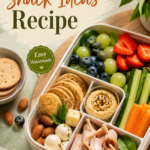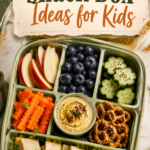
I used to spend way too long making snack boxes that came home untouched.
Pretty little compartments, cute shapes, the whole thing. Straight into the trash by 3pm.
So I started paying attention to what actually got eaten versus what just got admired and thrown out. Turns out kids don’t want “impressive.” They want familiar food in fun packaging.
Once I figured that out, snack box time went from a daily battle to something my kid actually asks for. 🙌
Here’s the exact system I use now, plus everything you need to make your own without the nightly stress.
What You’ll Need
You don’t need anything fancy here. Most of this is already in your kitchen.
Proteins:
- Sliced turkey or ham
- Hard-boiled eggs
- String cheese or cheese cubes
- Hummus (2-3 tbsp per box)
- Plain Greek yogurt
Carbs:
- Whole grain crackers
- Mini pretzels
- Sliced bread or tortillas (cut into shapes)
- Pita chips
- Rice cakes
Fruits:
- Grapes (halved for younger kids)
- Apple slices
- Strawberries
- Blueberries
- Orange segments
Veggies:
- Baby carrots
- Cucumber slices
- Cherry tomatoes (halved)
- Bell pepper strips
- Snap peas
Extras (the fun part):
- A small chocolate or two
- Popcorn
- Trail mix
- Dried fruit
- A tiny cookie
You won’t use all of these at once. Pick 4-5 categories per box and rotate through the week so nothing gets boring.
Tools You’ll Need
Nothing complicated. Just a few things that make assembly faster:
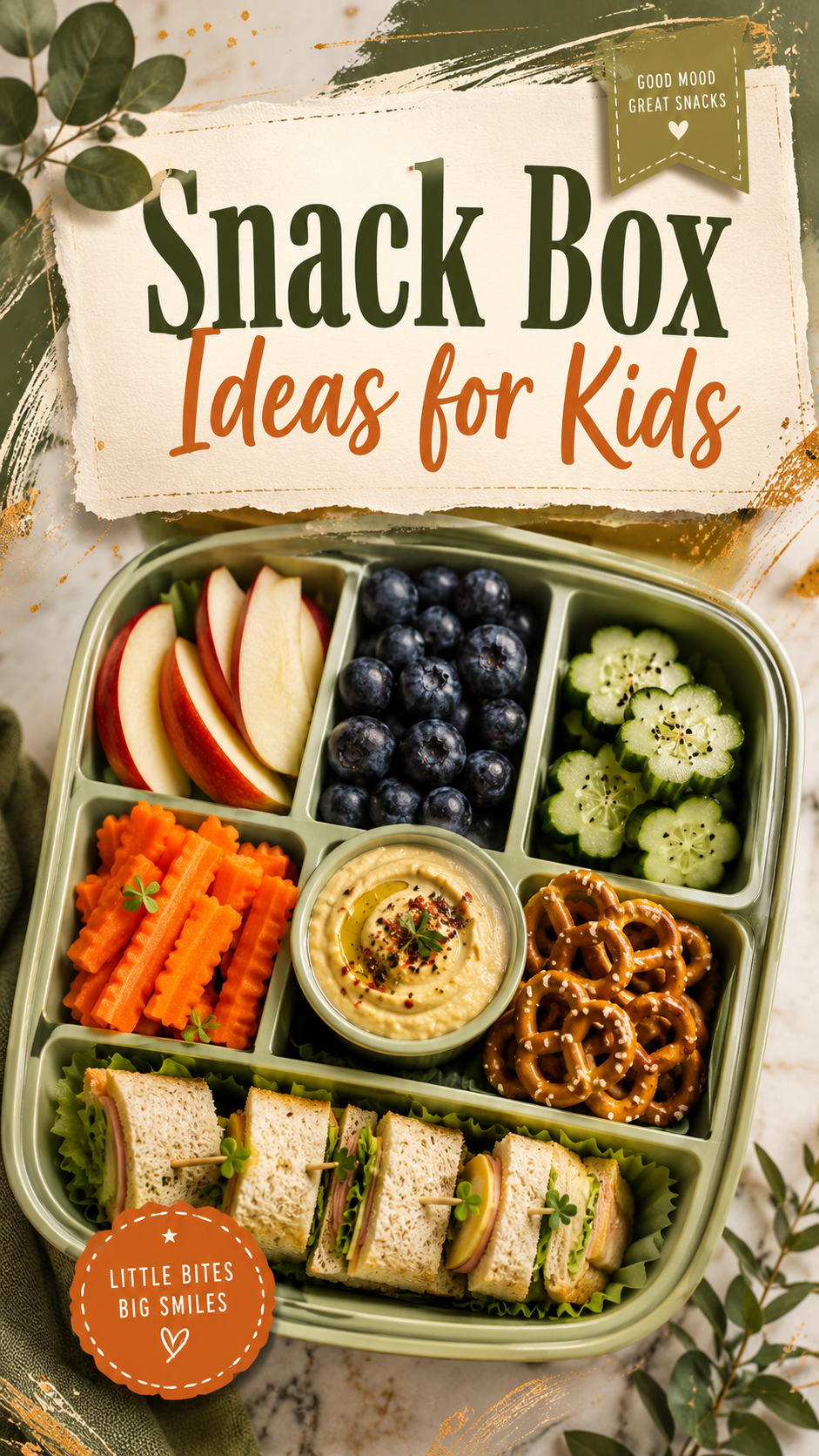
- A bento-style snack box with compartments
- Small silicone cupcake liners (great for wet items like hummus or berries)
- A mini cookie cutter (for sandwich or cheese shapes)
- Sharp knife and cutting board
- Reusable ice pack if the box isn’t insulated
Pro Tips
A few things I learned the hard way so you don’t have to.
- Cut everything small. Bite-sized pieces get eaten. Whole apples come home whole.
- Always include one “boring” favorite. A snack they already love guarantees the box isn’t a total loss even on picky days.
- Wet and dry items need separation. Hummus touching crackers by lunchtime equals soggy crackers and a sad kid.
- Color matters more than you’d think. Three different colored foods gets way more interest than a beige box.
- Let them help pack it once a week. Kids eat what they chose. It’s simple psychology, but it works almost every time.
The Assembly Instructions
Here’s how I actually put these together, start to finish.
- Pick your protein first. This is the anchor of the box. Add 2-3 oz to one compartment.
- Add a carb next to it. Crackers, pretzels, or bread go in a separate section so they stay crisp.
- Fill one section with fruit. Cut into small, manageable pieces.
- Add a veggie in another compartment. Pair it with a small dip if your kid is into that.
- Drop in your extra. One small treat, no more than a tablespoon or two.
- Add any dips in silicone liners. This keeps them from leaking into everything else.
- Close it up and pop it in the fridge if you’re prepping ahead, or straight into the lunch bag if it’s morning-of.
That’s genuinely it. Once you’ve got your categories memorized, this takes under five minutes.
Substitutions and Variations
Every kid is different, so here’s how to adjust:
- Dairy-free: Swap cheese for hummus or sunflower seed butter, and use coconut yogurt instead of Greek.
- Nut-free classroom: Skip trail mix and any nut butters. Use seed butter or roasted chickpeas instead.
- Gluten-free: Use rice cakes or corn-based crackers instead of wheat crackers.
- Vegetarian: Lean on eggs, cheese, hummus, and beans instead of turkey or ham.
- Warmer weather box: Skip anything that spoils fast (yogurt, hummus) and stick to shelf-stable items with an ice pack.
Make Ahead Tips
This is where snack boxes become a genuine lifesaver.
- Wash and cut all fruits and veggies on Sunday for the whole week.
- Hard-boil a dozen eggs at once and store peeled in the fridge.
- Portion crackers and pretzels into small bags so morning assembly is just grab and drop.
- Pre-fill silicone dip cups with hummus or yogurt so they’re ready to go.
Fifteen minutes of prep on Sunday saves you the entire week of scrambling.
Nutritional Breakdown (Per Average Box)
| Nutrient | Approximate Amount |
|---|---|
| Calories | 300-400 |
| Protein | 12-18g |
| Fiber | 4-6g |
| Sugar | 6-10g (naturally occurring) |
| Fat | 10-15g |
This will shift depending on what you pack, but this is a solid target range for an afternoon snack box that keeps a kid full without spoiling dinner.
Meal Pairing and Timing
These boxes work best as an after-school snack, not a meal replacement. Pack lighter portions if it’s going alongside lunch, and heavier proteins if it’s the only thing between school and dinner.
If your kid has activities right after school, add a little extra protein and a piece of fruit for quick energy.
Leftovers and Storage
Snack boxes are meant to be eaten same-day, but here’s what to do with extras:
- Cut fruit stays fresh for 2-3 days in an airtight container.
- Hard-boiled eggs (peeled) last up to a week in the fridge.
- Pre-cut veggies stay crisp for 3-4 days if stored with a damp paper towel.
- Hummus and yogurt should be used within 3-4 days once opened.
Don’t reassemble a full box and refrigerate it whole for more than a day. The textures don’t hold up, especially with dips involved.
FAQ
How far in advance can I prep these? You can prep components up to 4-5 days ahead. Just assemble the actual box the morning of or the night before.
What if my kid refuses everything new? Start with one new item alongside four familiar ones. Slowly increase the ratio as they warm up to trying things.
Are these safe for school lunches with allergy restrictions? Always check your school’s specific policy first. Most of these swaps above cover nut-free and dairy-free needs, but confirm with your school’s guidelines directly.
How do I keep things cold without a full lunch bag? A small reusable ice pack tucked into the box itself works better than relying on the bag alone.
Can I make a big batch for multiple kids at once? Yes. Just multiply the ingredient list and assemble boxes assembly-line style. It’s actually faster per box the more you make.
Wrapping Up
Snack boxes don’t need to be Pinterest-perfect to work. They just need to be packed with things your kid will genuinely eat.
Pick a few categories, prep once a week, and let the boxes do the rest.
Give this a try and let me know in the comments what combos worked (or didn’t) for your kids. And if you’ve got a favorite snack box hack of your own, I’d love to hear it.